


Shilpi Jain has written this paper.
This paper has been selected for LLJ Publication.
Abstract
The right to terminate a pregnancy in India occupies a distinctive constitutional position: neither an unqualified right nor a matter left wholly to legislative discretion, but a judicially recognised facet of personal liberty under Article 21 that operates within the statutory architecture of the Medical Termination of Pregnancy (MTP) Act, 1971. This paper traces the constitutional evolution of reproductive rights in India from the MTP Act’s original public-health rationale, through the Supreme Court’s recognition of reproductive autonomy as part of Article 21 in Suchita Srivastava v. Chandigarh Administration (2009), the broader privacy jurisprudence of Justice K.S. Puttaswamy v. Union of India (2017), the significant liberalisation effected by the MTP (Amendment) Act, 2021, and the Supreme Court’s 2022 ruling in X v. Principal Secretary, Health and Family Welfare Department extending equal access to unmarried women. It further examines the post-2021 phenomenon of more than a thousand High Court and Supreme Court petitions seeking termination beyond statutory gestational limits, culminating in a 2026 Supreme Court ruling permitting termination at an advanced gestational age of approximately 27–30 weeks on Article 21 grounds. The paper analyses the constitutional tension between a woman’s autonomy and dignity interests and the State’s compelling interest in protecting potential life, situates India’s gestational-limit, medical-board-based model comparatively, and concludes that while India’s framework is, on balance, rights-protective relative to many jurisdictions, its continued reliance on medical gatekeeping and judicial case-by-case intervention beyond statutory limits leaves meaningful gaps in the practical realisation of reproductive autonomy.
Keywords: reproductive rights, Medical Termination of Pregnancy Act, abortion, Article 21, bodily autonomy, Suchita Srivastava, Puttaswamy, gestational limits, India
Introduction
Unlike jurisdictions that frame abortion access as either a constitutionally protected autonomy right or a matter of plenary legislative control, India has developed a distinctive middle path: terminating a pregnancy remains a criminal offence under the Bharatiya Nyaya Sanhita, 2023 (previously the Indian Penal Code) save where the Medical Termination of Pregnancy Act, 1971 provides a specific statutory exception. Access is therefore mediated through a tiered structure of gestational limits, medical practitioner approvals, and, beyond certain thresholds, court-supervised medical boards—a framework the Supreme Court has progressively read in light of an independently recognised constitutional right to reproductive autonomy under Article 21.
This dual structure—a restrictive criminal default, opened by an increasingly liberalised statutory exception, overlaid with a judicially developed constitutional autonomy right—creates persistent friction at the margins, particularly for pregnancies discovered or complicated late in gestation. Since the MTP (Amendment) Act, 2021 took effect, more than 1,100 petitions have been filed before India’s High Courts and the Supreme Court by women seeking judicial permission to terminate pregnancies beyond the statutory limits applicable to their circumstances, a volume of litigation that itself signals significant gaps between the statutory framework and the lived reality of pregnancy, discovery, and decision-making.
This paper examines four questions. First, what is the constitutional foundation for reproductive rights in India, and how has it developed judicially? Second, what does the current statutory framework under the MTP Act, as amended, actually require? Third, how have courts negotiated the tension between this statutory framework and the constitutional autonomy right, particularly in cases at or beyond the statutory gestational limits? Fourth, how does India’s framework compare internationally, and what reforms would better reconcile statutory structure with constitutional principle?
Constitutional Foundations of Reproductive Rights
Suchita Srivastava v. Chandigarh Administration (2009)
The Supreme Court’s most direct early articulation of a constitutional reproductive-rights doctrine arose in Suchita Srivastava v. Chandigarh Administration (2009), concerning a woman with an intellectual disability, resident in a state-run welfare institution, who had become pregnant as a result of rape and wished to continue her pregnancy. The Punjab and Haryana High Court had directed termination of the pregnancy based on her disability, without her consent. The Supreme Court set this aside, holding that a woman’s right to make reproductive choices—encompassing both the choice to procreate and the choice to abstain from procreating—is a dimension of “personal liberty” under Article 21, inseparable from her rights to privacy, dignity, and bodily integrity. The Court simultaneously recognised a “compelling State interest” in protecting potential life, holding that this interest justifies the MTP Act’s framework of conditions and gestational limits as a reasonable restriction on an otherwise constitutionally grounded autonomy right—establishing the doctrinal structure within which subsequent cases have operated.
Puttaswamy and the Privacy Foundation
The Supreme Court’s 2017 ruling in Justice K.S. Puttaswamy v. Union of India, recognising privacy as a fundamental right under Article 21 with bodily autonomy as an explicit component, reinforced and broadened the constitutional basis Suchita Srivastava had already identified for reproductive decision-making, situating it within a wider doctrinal architecture of personal autonomy that the Court has since drawn upon across contexts extending well beyond reproductive choice.
Figure 1. Timeline of reproductive rights jurisprudence in India, 1971–2026.
The Compelling State Interest Doctrine
Indian courts have consistently declined to treat reproductive autonomy as an unqualified right, instead applying a doctrine under which the State’s interest in protecting potential foetal life strengthens as gestation progresses, justifying progressively stricter procedural requirements—from a single medical practitioner’s opinion in early pregnancy to a specialised Medical Board’s assessment beyond 24 weeks. This graduated approach distinguishes the Indian framework from jurisdictions adopting either a uniform autonomy-based standard throughout pregnancy or a fixed criminal prohibition after a single early threshold.
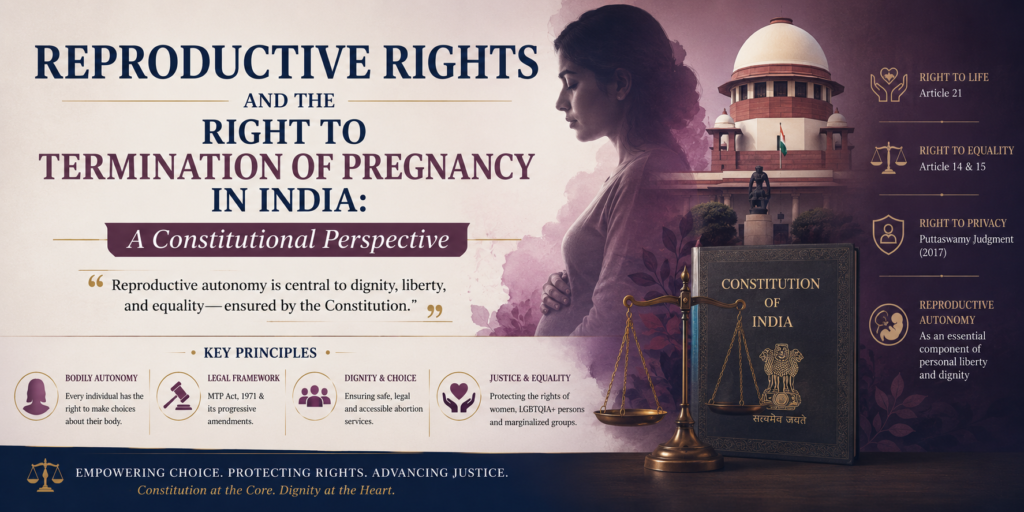
Figure 1b. Constitutional pillars of the right to reproductive choice in India.
The Statutory Framework: The MTP Act, 1971 and the 2021 Amendment
The Original 1971 Framework
The MTP Act, 1971 was enacted principally as a public-health measure, responding to high rates of maternal mortality and morbidity associated with unsafe, clandestine abortions, rather than as a rights-based reform. It created an exception to the general criminal prohibition on causing miscarriage, permitting termination up to 20 weeks of gestation where a registered medical practitioner (one practitioner for terminations up to 12 weeks under the unamended Act, two for 12–20 weeks) certified that continuing the pregnancy would risk grave injury to the woman’s physical or mental health, or that the child, if born, would suffer serious physical or mental abnormality, with statutory provision treating risk arising from contraceptive failure (for married women only, under the original Act) and pregnancy resulting from rape as constituting a presumed grave injury to mental health.
The MTP (Amendment) Act, 2021
The 2021 Amendment, which took effect on 25 March 2021, substantially liberalised this framework in response to documented gaps—including the difficulty of discovering pregnancy, accessing care, or obtaining a definitive foetal-anomaly diagnosis within the original 20-week window, particularly for women in rural or under-resourced settings.
Figure 2. Key gestational-limit changes introduced by the MTP (Amendment) Act, 2021.
As Figure 2 illustrates, the Amendment preserved the general 20-week limit (requiring one RMP’s opinion up to 20 weeks) but extended access to 24 weeks for specified categories of women requiring two RMPs’ opinions, including survivors of rape or incest, minors, women whose marital status changed during the pregnancy (widowhood or divorce), women with physical disabilities, mentally ill women, cases of foetal malformation with substantial risk of being incompatible with life, and women in humanitarian or disaster settings as may be declared by the Government. The Amendment also removed the upper gestational limit for terminations necessitated by substantial foetal abnormality, subject to the approval of a State-level Medical Board, and extended the “contraceptive failure” ground—previously available only to married women—to any woman or her partner, a change later read by the Supreme Court (see Section 3.3) as reflecting a legislative intent not to distinguish between married and unmarried women more broadly.
X v. Principal Secretary, Health and Family Welfare Department (2022)
Although the 2021 Amendment extended the contraceptive-failure ground to unmarried women, the implementing Rules’ specification of the 20–24-week special categories continued to be read by some authorities as applicable primarily to married women. In X v. Principal Secretary, Health and Family Welfare Department, NCT of Delhi (2022), an unmarried woman whose 24-week pregnancy arose from a consensual relationship was denied termination by the Delhi High Court on the ground that her case did not fall within the specified categories. The Supreme Court reversed, holding that the MTP Act and Rules, purposively construed, did not intend to distinguish between married and unmarried women, and that doing so would violate Articles 14 and 21. The judgment is widely regarded as a significant doctrinal advance, both for extending reproductive autonomy explicitly to unmarried women and for recognising, in an accompanying observation, that the concept of rape under the MTP Act’s rules can encompass non-consensual intercourse within marriage for the limited purpose of determining access to termination—without altering the separate criminal law treatment of marital rape.
Tiered Gestational Limits in Practice
Figure 3 summarises the resulting tiered statutory and judicial framework as it operates in 2026.
Figure 3. Tiered gestational-limit framework under the MTP Act, 1971, as amended.
The Rise of Litigation Beyond Statutory Limits
The Scale of the Phenomenon
Since the 2021 Amendment took effect, more than 1,100 petitions have reached India’s High Courts and the Supreme Court from women seeking judicial permission to terminate pregnancies that either exceed the applicable statutory gestational limit or fall outside the medical board’s assessed scope (for example, where the ground is not a qualifying foetal abnormality but a change in the woman’s social or economic circumstances, or a contested case of grave risk to mental health). This volume of litigation—sometimes described by commentators as a form of “judicial overreach” necessitated by statutory gaps—illustrates the practical limits of a rigid tiered-limit model in addressing the full range of circumstances in which termination may be sought.
The 2026 Supreme Court Ruling
In April 2026, the Supreme Court allowed an appeal permitting a minor to terminate a pregnancy at approximately 27 weeks’ gestation (with some reporting describing the case as approaching 30 weeks by the time of the procedure), after the Delhi High Court had denied permission on the basis of an AIIMS Medical Board’s finding that delivery at that stage would result in a live birth requiring active resuscitation, and that the minor’s psychiatric assessment had not revealed a major psychiatric disorder. The Supreme Court’s reversal reaffirmed that a woman’s (or, in the case of a minor, her guardian’s, exercised in the minor’s interest) constitutional right to reproductive autonomy under Article 21 can, in appropriate circumstances, take precedence over the procedural findings of a statutory Medical Board, particularly considering the minor’s overall welfare and the trauma associated with continuing an unwanted pregnancy arising from sexual violence. The ruling is among the highest reported gestational ages at which India’s apex court has permitted termination, underscoring courts’ continued willingness to engage in fact-specific, rights-based balancing beyond the MTP Act’s textual limits.
Tensions in the Case-by-Case Model
This pattern of individualised constitutional litigation, while protective of autonomy in the specific cases that reach appellate courts, raises structural concerns: access to this remedy depends heavily on a woman’s ability to engage legal counsel, navigate an expedited writ process, and obtain a sympathetic Medical Board assessment within a compressed timeframe, advantages unevenly distributed across India’s population. The resulting framework risks a two-tier system in which constitutional reproductive autonomy is most reliably available to women with the resources to litigate, even as the statutory text remains comparatively rigid for those without such access.
Comparative Perspective and Policy Recommendations
Comparative Context
India’s 20/24-week tiered-limit, medical-board-based model is, in formal terms, more liberal than the gestational limits applied in many jurisdictions, and notably more protective of access than the post-Dobbs v. Jackson Women’s Health Organization (2022) landscape in parts of the United States, where the U.S. Supreme Court eliminated the federal constitutional right to abortion previously recognised in Roe v. Wade, leaving regulation to individual states, some of which have enacted near-total prohibitions. India’s model differs structurally, however, from jurisdictions such as Canada (which imposes no criminal gestational limit at all, treating abortion purely as a medical-regulatory matter) and most Western European countries (which generally permit abortion on request within an early gestational window, typically 12–14 weeks, without requiring a specific medical justification, before shifting to a more restrictive, medically gate-kept regime thereafter).
Recommendations
- Amend the MTP Rules to codify, rather than require repeated judicial reinterpretation of, the principle established in X v. Principal Secretary that marital status is not a relevant ground for differentiating access within the statutory gestational tiers.
- Establish statutory timelines for Medical Board assessments and a structured, time-bound appellate mechanism within the medical/administrative system itself, to reduce reliance on writ litigation as the primary route for cases falling outside the Board’s initial assessment.
- Provide for legal-aid-supported, fast-track access to courts for women seeking termination beyond statutory limits, recognising that gestational age advances rapidly and that delay itself can foreclose the relief sought.
- Clarify, through rule-making or legislative amendment, the scope of permissible grounds beyond foetal abnormality for late-term termination (such as grave and substantiated risk to mental health), reducing the need for ad hoc constitutional litigation to fill statutory gaps.
- Strengthen first-trimester access and awareness (the 12-week medical-abortion pathway under the 2021 Amendment) to reduce the structural pressure that pushes a significant share of cases toward the more contested later-gestation thresholds in the first place.
- Mandate periodic, anonymised reporting on Medical Board decisions and post-24-week litigation outcomes to build an evidence base for future statutory reform, an area the literature notes remains under-researched at the implementation level.
Conclusion
India’s constitutional and statutory treatment of reproductive rights reflects a distinctive negotiated settlement between a woman’s autonomy and dignity interests, recognised as facets of Article 21 personal liberty since Suchita Srivastava v. Chandigarh Administration and reinforced by Puttaswamy, and the State’s compelling interest in the protection of potential life, operationalised through the MTP Act’s tiered gestational-limit and medical-board framework. The 2021 Amendment and the Supreme Court’s 2022 ruling in X v. Principal Secretary have significantly extended both the formal scope and the substantive equality of this framework, while the more than 1,100 post-2021 petitions seeking relief beyond statutory limits, culminating in the Supreme Court’s 2026 ruling permitting termination at an advanced gestational age, reveal the practical limits of any fixed statutory schema in capturing the full range of circumstances in which the constitutional right to reproductive choice must be vindicated. The central challenge going forward is not whether India recognises a constitutional reproductive-autonomy right—that question has been settled since 2009—but whether its statutory and administrative architecture can be reformed to make that right practically accessible without depending, as it currently does, on the comparatively privileged ability to litigate one’s way to its enforcement.
References
Suchita Srivastava & Anr. v. Chandigarh Administration, (2009) 9 SCC 1.
Justice K.S. Puttaswamy (Retd.) v. Union of India, (2017) 10 SCC 1.
The Medical Termination of Pregnancy Act, 1971 (Act No. 34 of 1971).
The Medical Termination of Pregnancy (Amendment) Act, 2021 (Act No. 8 of 2021).
Medical Termination of Pregnancy Rules, 2003 (as amended 2021), Rule 3B.
X v. Principal Secretary, Health and Family Welfare Department, Govt. of NCT of Delhi, (2022) SCC OnLine SC 1321.
Supreme Court of India, ruling permitting termination of pregnancy of a minor at advanced gestational age (April 2026).
Center for Reproductive Rights, “India Abortion Law: MTP Amendment Factsheet” (2025).
Dobbs v. Jackson Women’s Health Organization, 597 U.S. 215 (2022).
Jain, D. (2023). “Supreme Court of India judgement on abortion as a fundamental right: breaking new ground.” Sexual and Reproductive Health Matters, 31(1).